
O-House
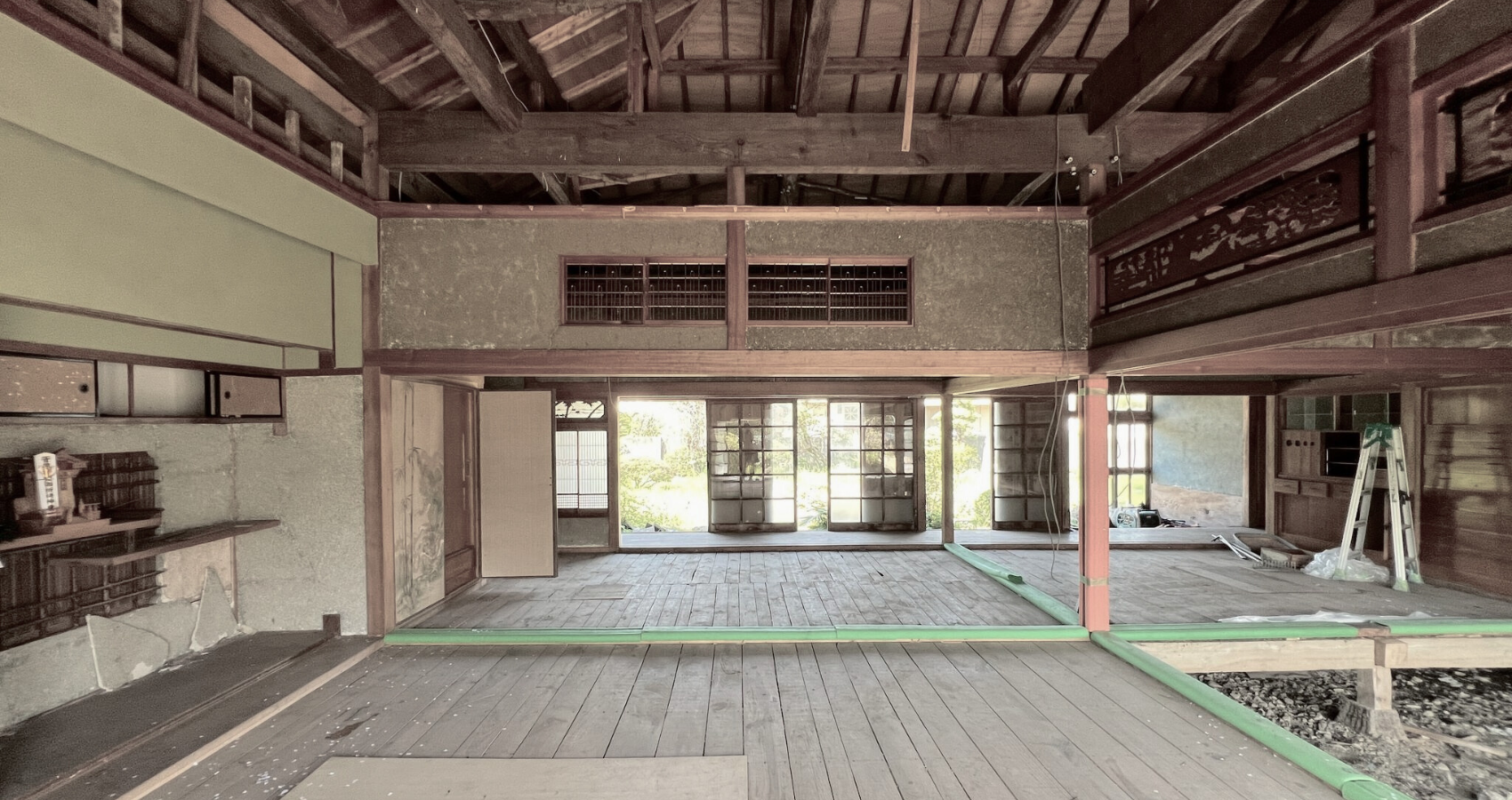
Reimagining a 150-year-old house for the next century
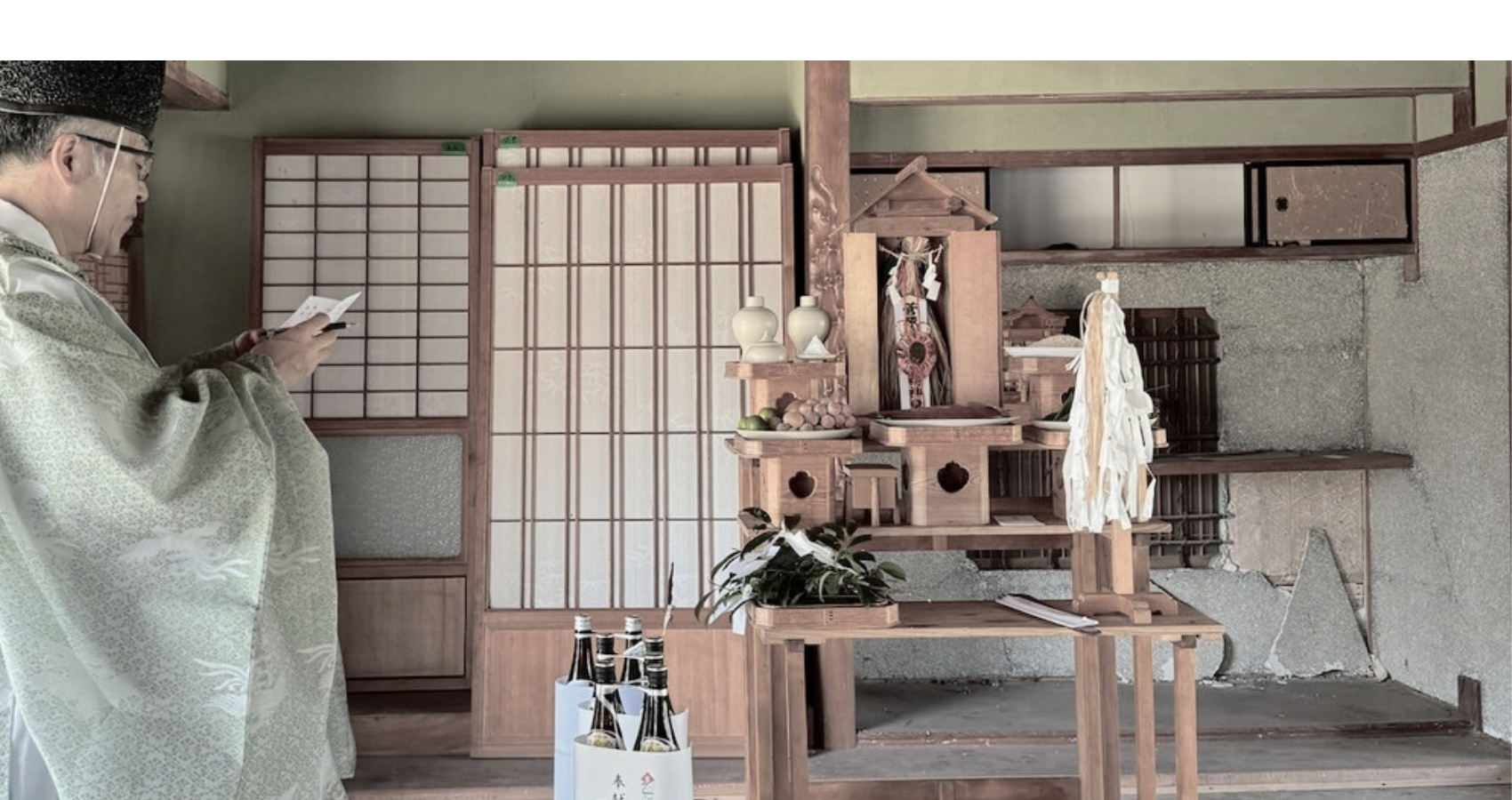
Located next to the historic Oishi Sake Brewery in Akune City, Kagoshima, this project renovates an old house deeply connected to its cultural surroundings. After years of alterations and without seismic reinforcement, the building had fallen out of use — leading the owner to choose restoration and reuse rather than demolition.
Challenging the short lifespan of Japanese homes
Originally built more than 150 years ago, the O-House is a renovation project – challenging the common perception that Japanese homes are short-lived compared to their European counterparts.
Rather than demolishing and rebuilding, this project demonstrates how renovation combined with energy optimisation and life cycle thinking can deliver significant environmental benefits – significantly extend the life of existing homes, and redefine their value for future generations.
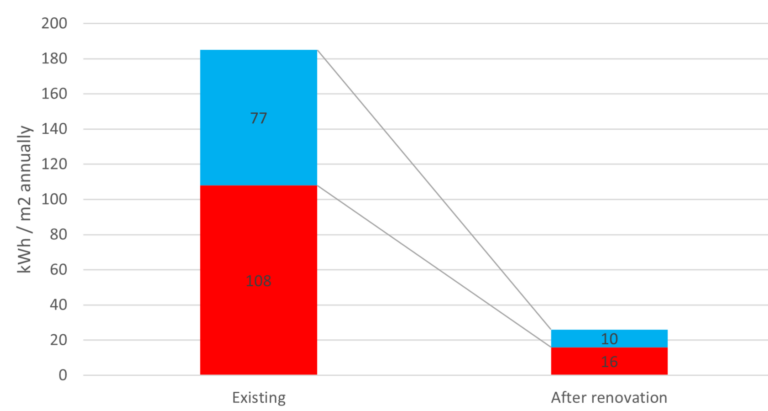
Annual energy demand is significantly reduced after renovation, with heating (red) and cooling (blue) energy consumption dropping by approximately 80% compared to the existing building.
The result is an estimated 80% reduction in energy consumption and a 40% reduction in carbon emissions compared to new construction.
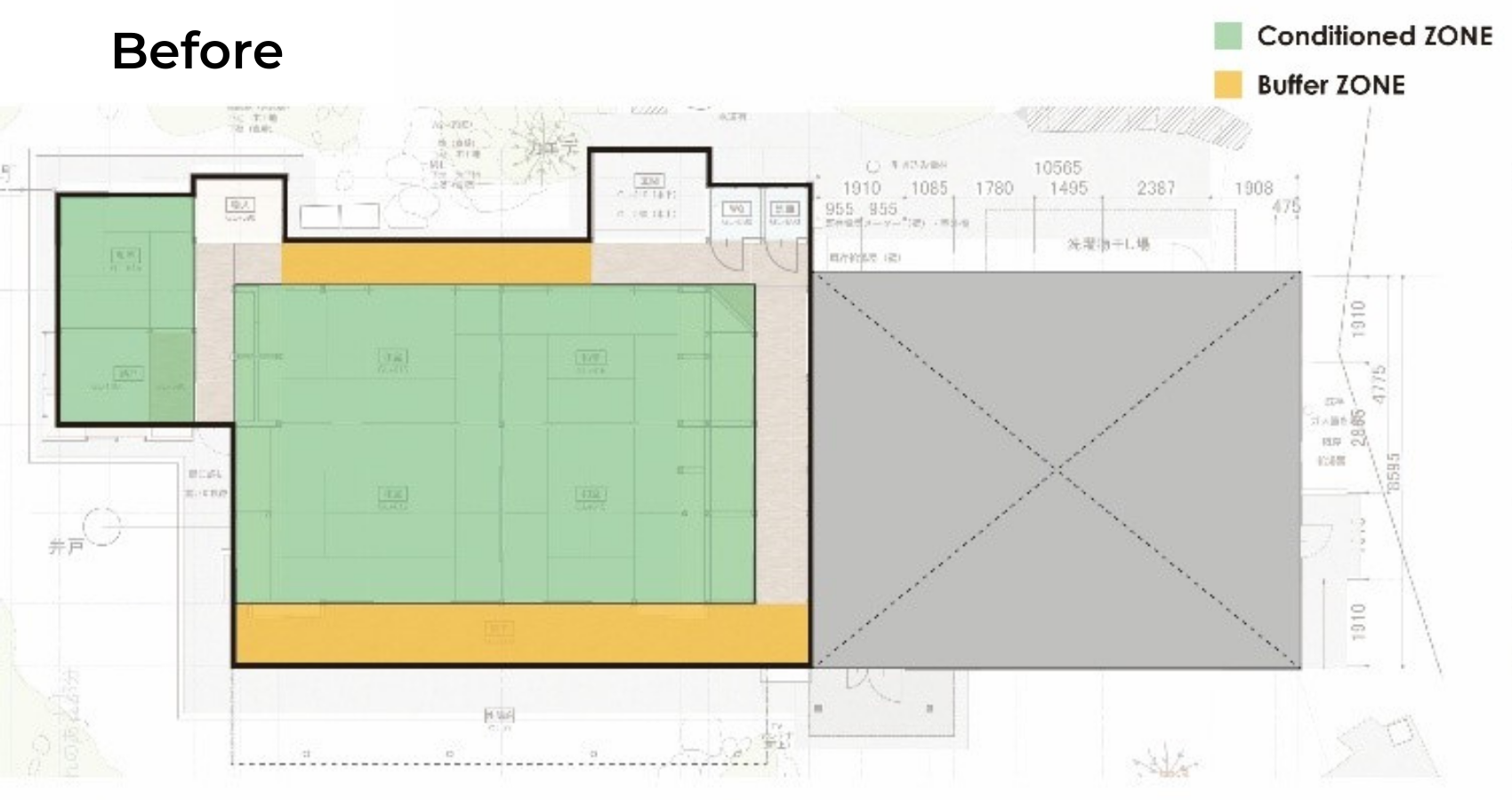
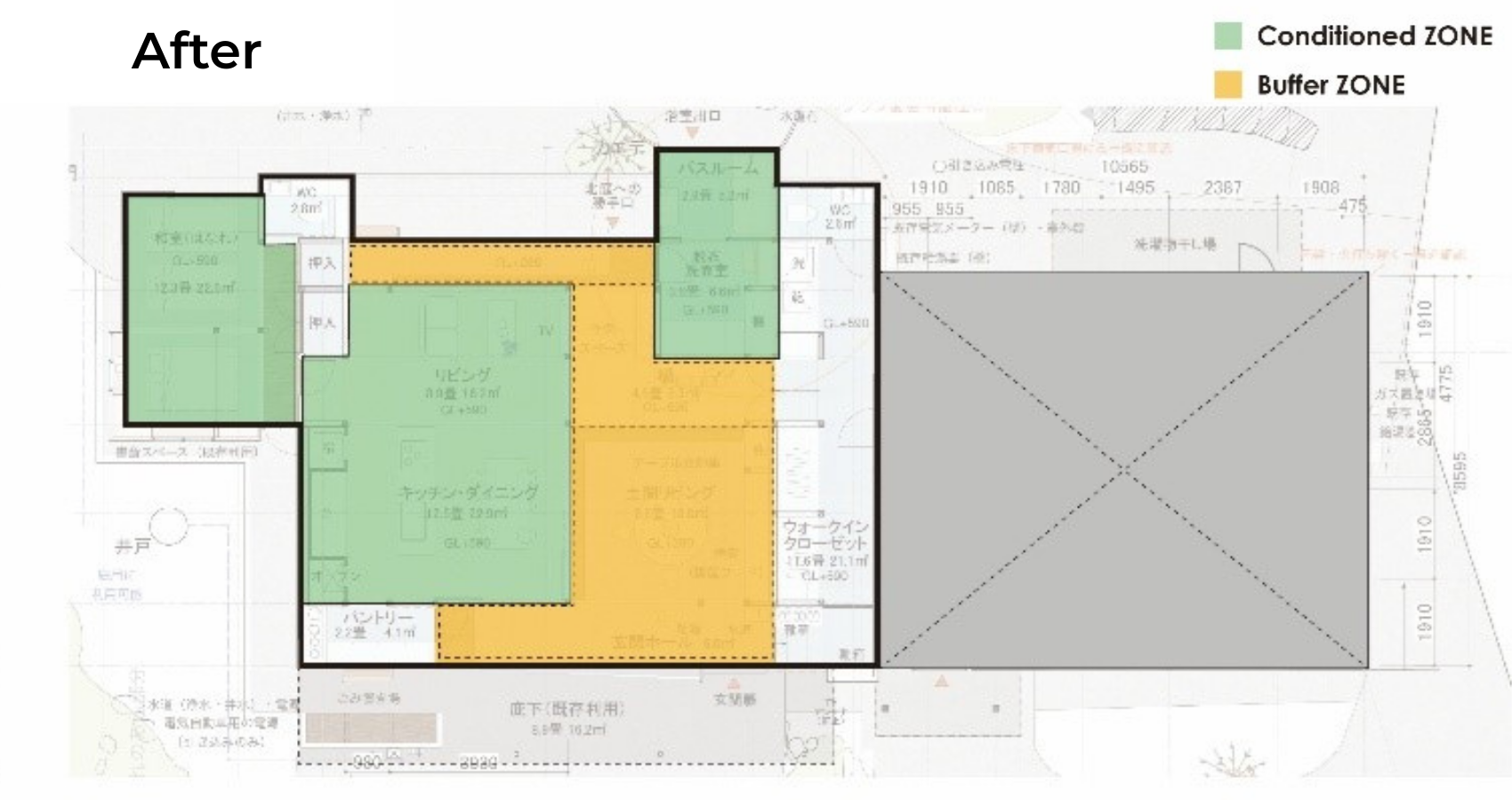
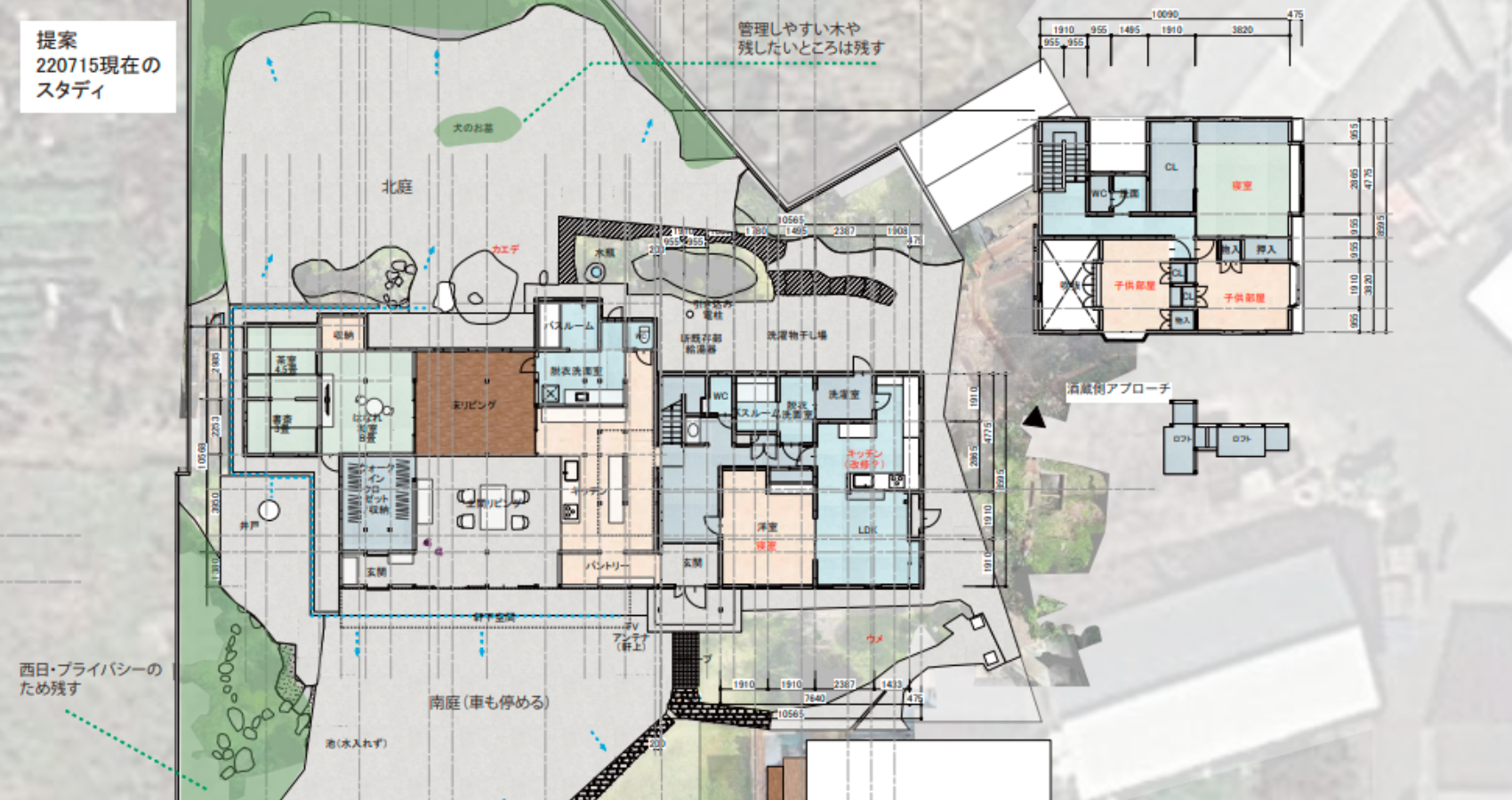
The traditional Tanoji layout has been reinterpreted to improve spatial zoning and minimise the areas requiring heating and cooling, enhancing both indoor comfort and energy efficiency.
LCA and waste treatment
henrik-innovation contributes with expertise in energy performance, indoor comfort, and LCA, supporting a renovation that respects heritage while meeting contemporary sustainability goals.
The Life Cycle Assessment shows that new construction generates significantly higher emissions related to waste treatment compared to renovation. In a new build scenario, large amounts of existing materials must be demolished, transported, and processed as waste, resulting in a substantial carbon footprint from the waste treatment.
By choosing renovation, the majority of the existing structure is retained, drastically reducing demolition waste and associated emissions. This demonstrates how extending a building’s life not only preserves embodied carbon, but also avoids the climate impacts linked to material disposal and waste processing.
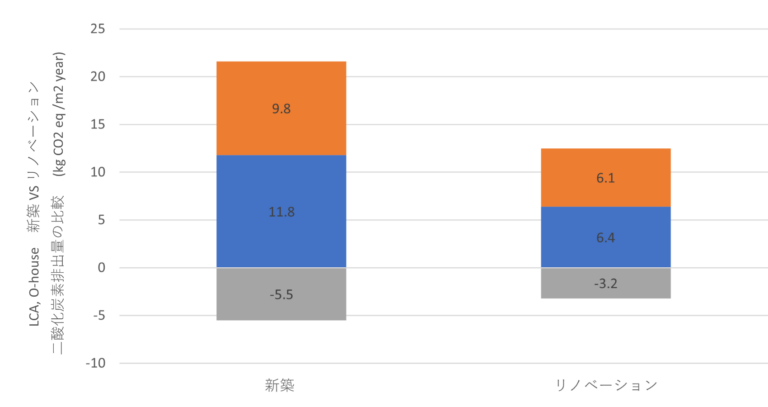
The Life Cycle Assessment compares new construction (blue and orange) with renovation, including carbon storage in existing materials (grey), showing around 40% lower CO₂ emissions for renovation.